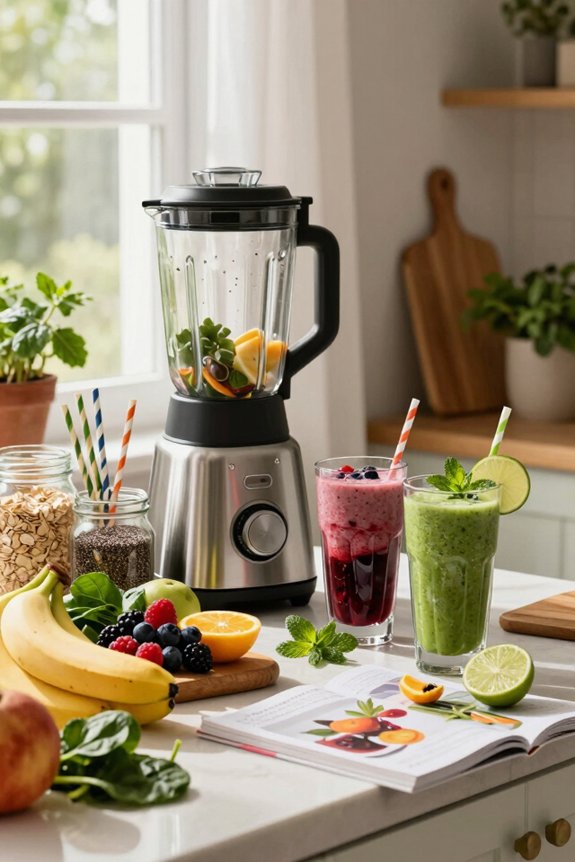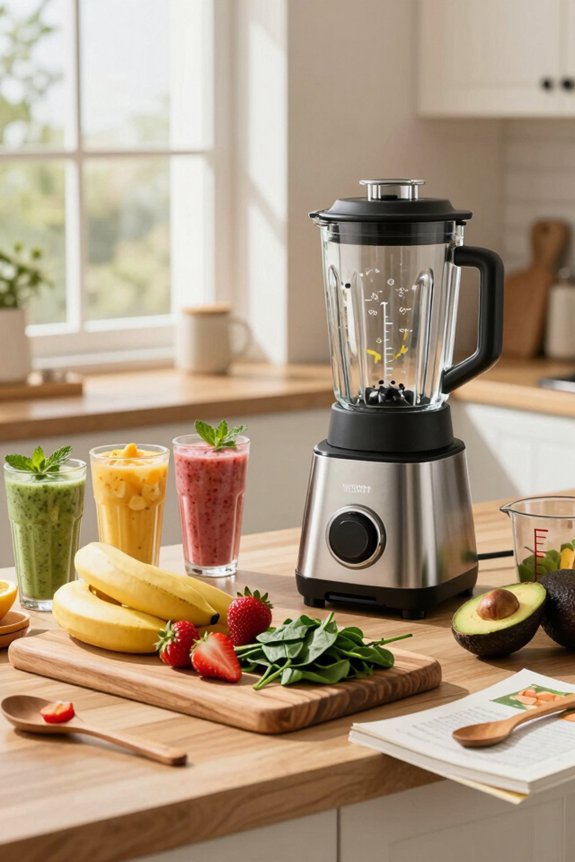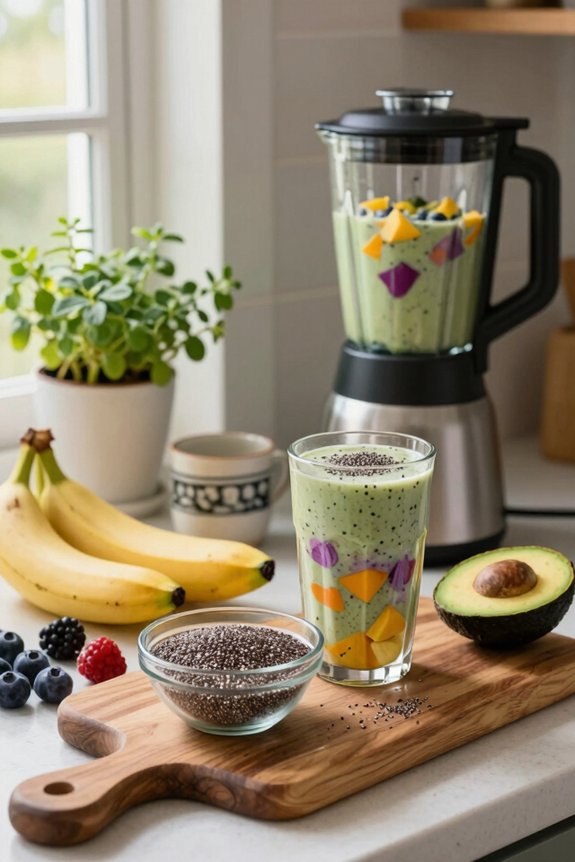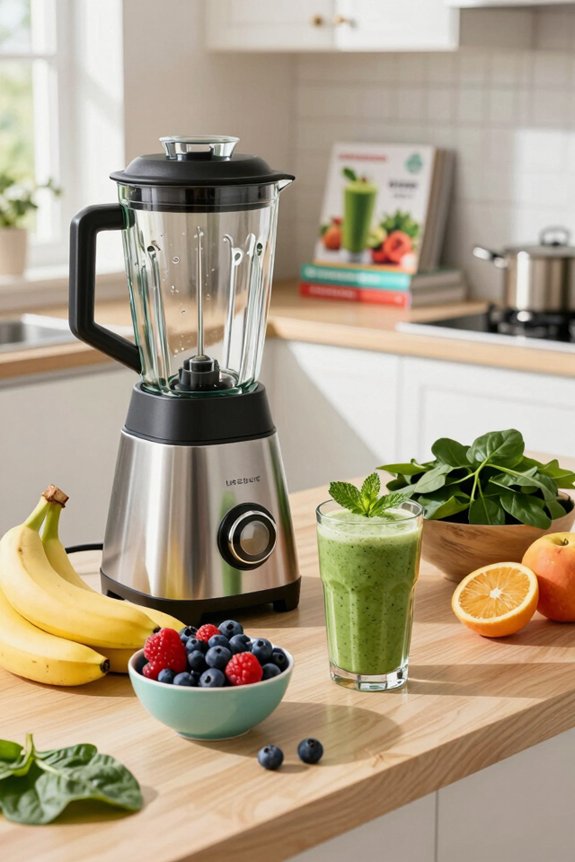
Smoothies can definitely be healthy, packed with nutrients that give your immune system a boost and help with digestion. Just think about it: you toss in leafy greens, your favorite fruits, and a protein source like yogurt—yum. But watch out for sugary additions that sneak in calories. Homemade smoothies let you control those ingredients, keeping it fresh and fun. Want to make the best smoothie possible? There’s more to explore on what really makes a smoothie healthy.
Unlocking the Health Benefits of Smoothies
Have you ever wondered how a simple smoothie can pack such a health punch? You might be asking, are fruit smoothies healthy? The answer’s a resounding yes—if you make the right choices.
These tasty blends can boost your immune system, give you energy, and even help with digestion. Think about adding leafy greens, fresh fruits, or a scoop of yogurt. It’s like a mini salad that tastes dreamy.
Sure, some smoothies can be sugar bombs, so pick wisely. It’s all about balance, right? And who doesn’t love sipping something beautiful and nutritious while feeling like you’re indulging?
How to Create a Balanced Smoothie
Creating a balanced smoothie is like crafting the perfect harmony in a song; it just feels right. Start with a base of leafy greens—kale or spinach, anyone?
Next, toss in your favorite fruits, because are fruit smoothies good for you? Absolutely, but balance is key.
Add a scoop of protein, like Greek yogurt or a nut butter, to keep you full.
Don’t forget a splash of liquid, whether it’s almond milk or coconut water, to bring it all together.
Blend until smooth, but not too smooth; texture matters.
Taste it! Adjust flavors as needed.
Happiness in a glass? Yes, please.
Common Smoothie Mistakes to Avoid
When it comes to smoothies, hitting that sweet spot between delicious and nutritious can feel like walking a tightrope.
One common mistake? Loading up on sugary yogurt or juice. You might ask, “Are smoothies good for you?” Well, not if they’re a sugar bomb.
Another pitfall is skimping on protein. Incorporating Greek yogurt or nut butter can really help.
And, don’t forget about your greens. Tossing in spinach or kale will boost the nutrients without altering the taste much.
Finally, watch portion sizes—surprisingly, that large smoothie may not be as healthy as it seems.
Keep it balanced, and your smoothies can shine.
Understanding Sugar in Smoothies
Sugar sneaks into smoothies in ways you mightn’t even realize, often resulting in a drink that’s more dessert than health booster.
You know those sugary yogurt containers you love? They’re often hiding tons of added sugar.
Even some fruits can pack a sugary punch when blended.
So, is a fruit smoothie healthy? It depends on what you throw in the blender.
Toss in a banana, some spinach, and unsweetened almond milk, and you’ve got a winner.
But add a scoop of ice cream? You might want to rethink that one.
Balance is key, and you’ve got this.
Homemade vs. Store-Bought Smoothies: Which Is Healthier?
Ever wondered whether the smoothies you grab from the store are as healthy as the ones you whip up at home?
Store-bought smoothies can pack hidden sugars and preservatives, while homemade blends let you control ingredients. You can toss in fresh fruits, veggies, and perhaps some sneaky spinach.
So, is smoothie healthy? Well, it depends. If you’re choosing ingredients wisely, your homemade version can be loaded with nutrients.
Plus, it’s fun—more like a tasty science experiment in your kitchen. So, next time, resist that store option. Blend something awesome instead. Trust your skills; they’re probably better than you think.
Dietary Considerations for Smoothies: Are They Right for Everyone?
So, are smoothies the best choice for everyone? While fruit smoothies can be good for you, they may not suit everyone’s diet.
If you’re watching your sugar intake, those tasty blended treats might pack more sweetness than you expect. Also, if you’re sensitive to fiber, the chunks of fruit could cause some digestive drama.
On the flip side, smoothies are a great way to sneak in those nutrients! Just remember to balance your ingredients and don’t overload on fruits. Mixing in greens, proteins, or healthier fats can add variety.
Ultimately, listening to your body is key when deciding what’s right for you.
Frequently Asked Questions
Can Smoothies Replace a Full Meal Effectively?
Smoothies can effectively replace a full meal if packed with nutrients, but they might lack satiety. If you choose wisely, blending fruits, veggies, and protein can keep you satisfied and energized throughout the day.
Are Green Smoothies Better Than Fruit Smoothies?
Green smoothies often provide more nutrients and fiber than fruit smoothies, so you get a boost of vitamins and minerals. However, it’s best to enjoy both for a balanced diet and varied flavor profiles.
How Can I Add Protein to My Smoothies?
To transform your smoothie into a powerful elixir, add Greek yogurt, protein powder, or nut butter. These ingredients symbolize strength, turning your drink into fuel for both body and mind. You’ll feel empowered with every sip.
What Fruits Should I Avoid in Smoothies?
You should avoid fruits high in sugar, like bananas and grapes, if you’re watching your-carb intake. Also, limit dried fruits, as they pack concentrated sugars. Focus on berries and greens for a healthier option.
Can I Freeze Smoothies for Later Consumption?
Absolutely, you can freeze smoothies for later. Imagine a frosty treasure chest, bursting with flavors. Just pour your smoothie into an airtight container, leaving space for expansion. When you’re ready, blend or thaw for a revitalizing treat!