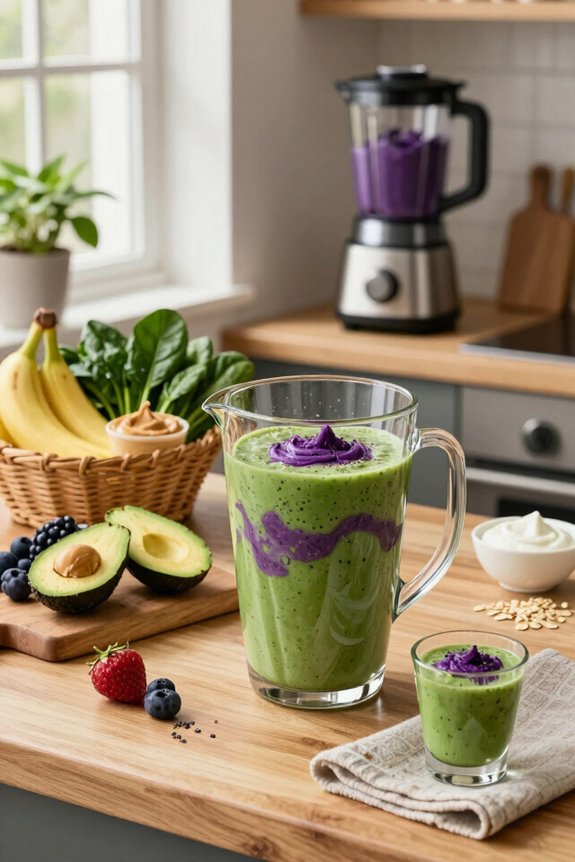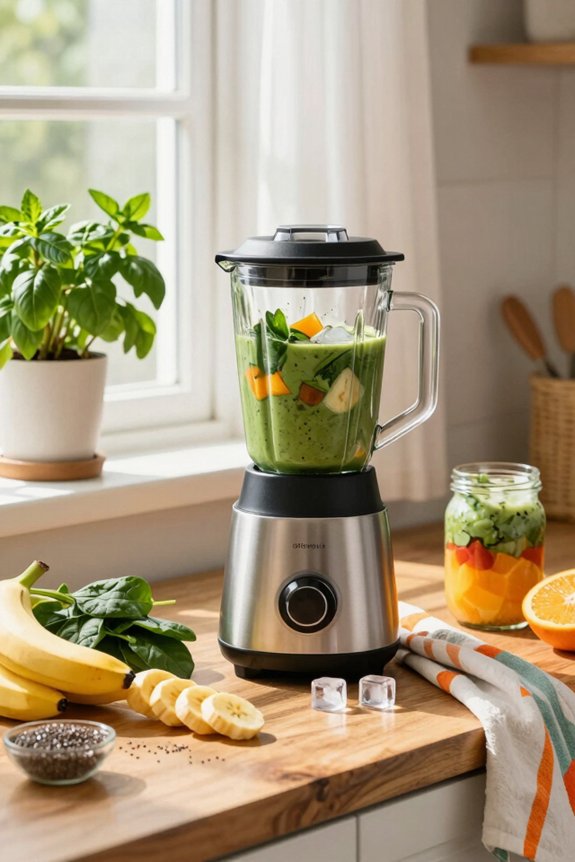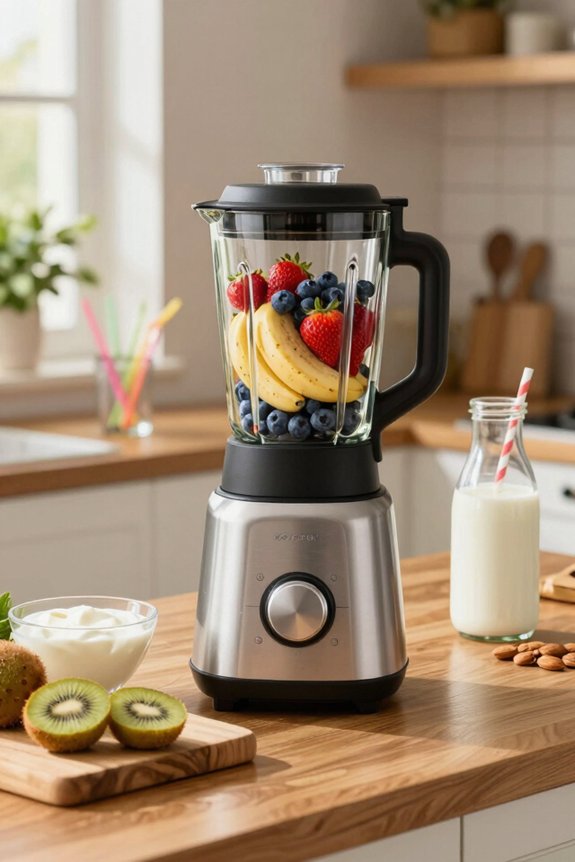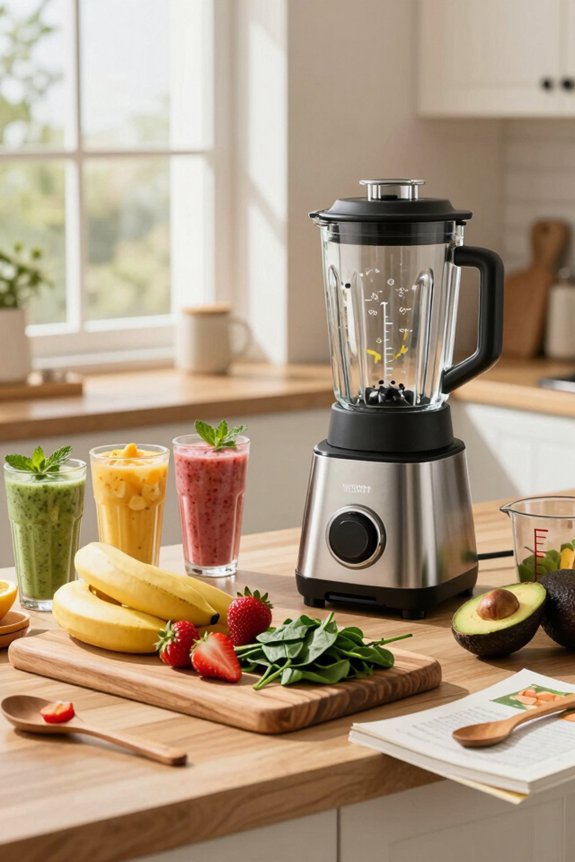
Are smoothies fattening? Well, it depends. If you throw in sugary yogurt and loads of fruit, it can turn into a calorie bomb. Seriously, oversized smoothies can pack in the same calories as a burger. But, don’t worry. You can keep it light with fresh fruits, greens, and low-cal bases. Portion size matters too; smaller smoothies can be a nutritious snack without the guilt. Curious about how to make the perfect smoothie without piling on calories?
Are Smoothies Fattening? Understanding the Caloric Impact?
Have you ever wondered if smoothies are actually fattening? You might think, “They’re healthy, right?” But hold on. Not all smoothies are created equal.
Some can pack in calories faster than you can say “banana split.” If you’re throwing in sugary yogurt or too many fruits, do smoothies make you gain weight? Absolutely.
Portion sizes matter too. A giant smoothie could easily rival a burger in calorie count.
So, before you gulp down that colorful concoction, check what’s in it. A smoothie can be a tasty treat, but watch those sneaky ingredients.
Your waistline will thank you later.
Nutritional Benefits and Drawbacks of Smoothies
Smoothies can be a bit of a nutritional puzzle. On one hand, they’re packed with vitamins and minerals from fruits and veggies.
But here’s the kicker—some smoothies are also loaded with sugars, which begs the question, is smoothie fattening? If you’re not careful, do smoothies make you fat? They can!
The base ingredients matter too; think about the difference between almond milk and full-fat yogurt. Just a little too much of the sweet stuff, and you might find yourself reaching for those stretchy pants.
Balance is key, so enjoy your smoothie, but maybe skip that extra scoop of ice cream.
How Ingredient Choices Influence Smoothie Calories
When you whip up a smoothie, the ingredients you choose can totally make or break your calorie count.
Think about it—are fruit smoothies fattening? If you toss in heavy yogurt and lots of peanut butter, you’re stacking up calories faster than you can say “smoothie overload.”
On the flip side, if you stick to fresh fruits, spinach, and a splash of almond milk, you’ll keep it lighter.
Can smoothies make you gain weight? Definitely, if you go wild with added sugars or high-calorie extras.
Portion Size: How It Affects Smoothie Consumption
The size of your smoothie can really make a difference in how it fits into your daily routine and waistline.
Ever wondered if smoothies make you gain weight? If you’re blending a giant cup, you might be unknowingly sipping yourself into a calorie overload.
A small to medium portion can be a tasty, nutritious snack instead of a meal replacement.
So, will smoothies make you fat? It all depends on how much you drink.
Watching your portion size keeps those unwanted pounds at bay, turning your smoothie from a guilt trip into a guilt-free treat that you genuinely enjoy.
Common Smoothie-Making Mistakes to Avoid
Even though whipping up a smoothie seems as easy as throwing a few fruits and some yogurt into a blender, you might be making some classic mistakes that can turn your healthy drink into a calorie bomb.
Forgetting about portion sizes, for one. A few extra scoops of nut butter and bam—you’re sipping on something that can make smoothies fattening.
Also, drowning it in sugary juices makes you wonder, do fruit smoothies make you gain weight?
Instead, aim for balance. Stick to whole fruits, add greens, and keep those add-ins in check.
Easy Tips to Customize Your Smoothie for Weight Control
Customizing your smoothie can be a game changer for weight control, especially if you want to sip on something satisfying without overloading on calories.
Start by choosing low-calorie bases like unsweetened almond milk or water, and watch out for added sugars in those fruit smoothies.
Is fruit smoothies fattening? It depends on your ingredients! Opt for whole fruits instead of juices.
Feeling adventurous? Add greens like spinach or kale for extra nutrients without the extra calories.
How to Fit Smoothies Into Your Balanced Diet
Finding a way to fit smoothies into your balanced diet doesn’t have to feel like a high-stakes game of Tetris. Start by keeping portions reasonable; a smoothie shouldn’t be a meal replacement unless it’s packed with protein and healthy fats.
So, do fruit smoothies make you fat? Not if you balance them! Use fresh fruits, leafy greens, and blend in some seeds or nuts wisely.
Wondering, will fruit smoothies make you gain weight? Focus on moderation and don’t skip out on whole foods. A smoothie can be a tasty treat that won’t derail your healthy eating—just blend it right.
Frequently Asked Questions
Can Smoothies Replace Meals for Weight Loss?
Smoothies can replace meals for weight loss, packing in nutrients without overload. If you whip up a vibrant blend of spinach and berries, you’ll feel like you’ve just sipped sunshine and energy!
Are Store-Bought Smoothies Healthier Than Homemade Ones?
Store-bought smoothies often contain added sugars and preservatives, so they’re usually less healthy than homemade ones. By making your own, you can control ingredients, ensuring you get the nutrients without unnecessary additives.
What Are the Best Smoothie Ingredients for Muscle Gain?
For muscle gain, you’ll want to include protein powder, spinach, bananas, oats, and nut butter. These ingredients help you build muscle while providing essential nutrients. Just watch your portion sizes to stay on track!
How Often Should I Drink Smoothies for Health Benefits?
You should drink smoothies a few times a week for ideal health benefits. They’re a great way to increase nutrient intake, boost energy, and support overall wellness when balanced with whole foods and regular meals.
Do Green Smoothies Have Fewer Calories Than Fruit Smoothies?
Yes, green smoothies generally have fewer calories than fruit smoothies. They often rely on leafy greens and water or low-calorie liquids, while fruit smoothies tend to be higher in sugar and calories from fruits.